War in the Middle East: How it affects Latam and your investments

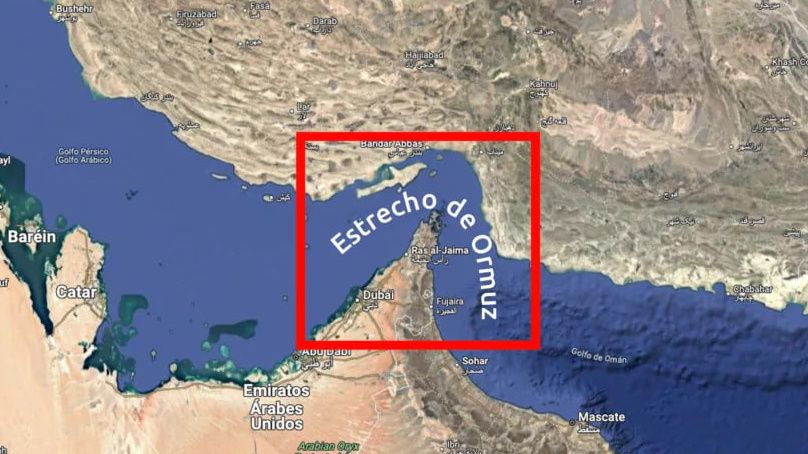
The military escalation between the United States, Israel, and Iran that broke out in February 2026 is shaking global markets and generating direct consequences for Latin America. With more than 1,000 dead in Iran, the threatened closure of the strategic Strait of Hormuz, and oil soaring to $67 per barrel (levels not seen since July 2025), the conflict is redefining capital flows, putting pressure on emerging economies, and forcing Latin American investors to rethink their strategies.
While Latin American governments express diplomatic concern and raise security measures, as reported by CNN en Español, investors in the region face urgent decisions on how to protect their wealth amidst global uncertainty.
The conflict: From Midnight Hammer to open war
The current crisis has deep roots. As explained by Foreign Affairs Latinoamérica, the turning point was Operation Midnight Hammer on June 21, 2025, when the United States bombed three critical Iranian nuclear facilities: Fordow, Natanz, and Isfahan. After a brief ceasefire in what Trump called the "Twelve-Day War," hostilities resumed with force in February 2026.
On February 28, the United States and Israel launched Operation Epic Fury, a massive bombing campaign that, according to various reports, caused the death of the Iranian supreme leader, Ayatollah Ali Khamenei. Iran responded by attacking more than 500 U.S. and Israeli targets in the region, including the U.S. embassy in Riyadh, military bases in Qatar and Kuwait, and positions in Lebanon and the Persian Gulf.
As international analyst Mookie Tenembaum points out, cited by La Nación, "the most important thing for the world economy is the attack on Qatar, because there is plenty of oil, but the real problem is the shortage of gas." The threat of closing the Strait of Hormuz, through which 20% of the world's oil passes, set off alarms in all emerging markets, including Latin America.
Direct consequences for Latin America
Increase in energy prices and imported inflation
The most immediate impact for Latin America is the rising cost of energy. According to Foreign Affairs, the abrupt rise in oil and gas prices has global "macroeconomic consequences" that especially affect emerging economies dependent on energy imports.
For non-oil-producing Latin American countries, this increase means additional inflationary pressure on fuel, transportation, and petroleum-derived products. In already vulnerable economies like Argentina, where inflation was around 200% before the conflict, or Mexico, which depends significantly on U.S. gas, the impact can be devastating for the purchasing power of millions of families.
Volatility in financial markets
As reported by Ámbito, Argentine dollar-denominated bonds have been "dying red" since the outbreak of the war, with drops of up to 1% in the main sovereign securities. The S&P Merval fell 0.6%, while leading banking stocks lost up to 4.1%. Argentine ADRs plummeted up to 4% on Wall Street.
This volatility is not exclusive to Argentina. Global investors are fleeing emerging market assets toward safe havens, generating capital outflows that put pressure on local currencies, increase financing costs, and complicate the fiscal situation of Latin American governments.
Interruption of trade and supply chains
The conflict caused the closure of major airports in the Middle East and multiple airlines suspended their flights to the region. Although the direct impact on Latin American tourism to the Middle East is limited, disruptions in global supply chains and trade routes affect the international trade on which the region's economies depend.
Risk of famine and food security
As UN News rightly warns, although Latin America made progress in the fight against hunger, 33 million people still suffer from food insecurity. A prolonged conflict that affects the prices of agricultural commodities and fertilizers could aggravate this situation, especially in the most vulnerable Central American and Caribbean countries.
Long-term economic implications
Beyond the immediate impact on financial markets, a prolonged conflict in the Middle East could have structural consequences for Latin America:
Fiscal pressure on governments
The increase in energy prices reduces the fiscal space of governments that subsidize fuel or electricity. This could force painful adjustments or debt increases at a time when international financing is more expensive.
Acceleration of the energy transition
Paradoxically, the crisis could accelerate investments in renewable energy in the region. Brazil, Chile, Mexico, and Argentina have enormous potential in solar, wind, and hydroelectric energy that could reduce dependence on imported hydrocarbons.
Opportunities for commodity producers
Oil-exporting countries like Venezuela, Colombia, Brazil, Mexico, and Ecuador could benefit from high prices, although the benefit will depend on their productive capacity and internal political situation.
Strategies for Latin American investors during the crisis
Given the current context, how should investors in the region position themselves?
For conservative profiles
Prioritize capital preservation:
- 50-60% in traditional safe-haven assets (gold, tokenized gold)
- 30-40% in stablecoins (USDT, USDC)
- 10% in Bitcoin for exposure to potential upside
This allocation protects against inflation and devaluation while maintaining liquidity and minimizing volatility.
For moderate profiles
Balance protection with growth:
- 40% in safe-haven assets
- 20% in stablecoins
- 30% in Bitcoin
- 10% in selected altcoins (Ethereum, Solana)
This approach captures appreciation opportunities while maintaining a solid base in safe-haven assets.
For aggressive profiles
Maximize profit potential:
- 20% in safe-haven assets (defensive base)
- 10% in stablecoins (liquidity)
- 50% in Bitcoin
- 20% in high-potential altcoins
This portfolio assumes higher volatility in exchange for potentially higher returns if the conflict is resolved positively.
Staying attentive to cryptocurrency news, knowing market sentiment, and following developments in the crypto environment in general (beyond the bitcoin price) will allow you to stay one step ahead with your investments.
WEEX: Your secure platform in times of uncertainty
In this context of geopolitical uncertainty and market volatility, having a reliable exchange is fundamental. WEEX has positioned itself as one of the most respected platforms for Latin American investors.
Why WEEX during geopolitical crises?
Unwavering institutional security: With a User Protection Fund of 1,000 BTC, WEEX offers essential peace of mind when global markets are in chaos. In moments when some exchanges experience liquidity problems, this guarantee is invaluable.
Deep liquidity in all markets: With more than 1,800 trading pairs, WEEX ensures that you can execute large trades without significant slippage, which is critical during periods of high volatility.
24/7 continuous operation: While traditional markets close and uncertainty grows, WEEX operates without interruptions, allowing you to adjust your positions at any time.
Spanish interface and regional support: WEEX understands the specific needs of Latin American investors and offers dedicated support.
For those looking to better understand the available options, WEEX offers resources such as Bitcoin or Gold: Do you need to choose? and Do you know PAXG (PAX Gold)? The digital gold in Latin America that help you make informed decisions about diversification in critical moments.
The time factor: How long will the conflict last?
The duration of the conflict will determine the magnitude of its consequences. As Tenembaum points out, cited by La Nación, Trump "always says he doesn't understand why there are wars when there could be business," suggesting U.S. pressure for a quick resolution.
However, the analyst also warns that "Iran has only one strategy: hold on," indicating that Iranian resistance could prolong hostilities. A short conflict scenario (weeks) would have a limited and transitory impact. A prolonged conflict (months or years) could fundamentally restructure global energy markets.
Critical risks to monitor
Latin American investors should be attentive to several risks:
Regional escalation: The entry of actors like Hezbollah in Lebanon or Iranian allies in Iraq and Syria could expand the conflict significantly.
Blockade of the Strait of Hormuz: If it extends, it would cause an oil shock greater than that of 1973, with devastating consequences for emerging economies.
Intervention by global powers: China and Russia expressed their support for Iran. A direct confrontation between the superpowers could trigger a global crisis.
Panic in financial markets: A massive sell-off on Wall Street due to fear of a global recession would severely affect Latin American emerging markets.
Conclusion: Preparation in the face of uncertainty
The war in the Middle East between the United States, Israel, and Iran is generating tangible consequences for Latin America, ranging from inflationary pressure due to oil at $67 a barrel to financial volatility that sinks Latin American bonds and stocks. With more than 1,000 dead, the Strait of Hormuz threatened, and regional governments expressing concern, the geopolitical crisis is not a distant event but a reality that directly affects the pockets of millions of Latin Americans.
However, amidst the uncertainty, there is opportunity for informed investors who proactively adjust their strategies. Intelligent diversification between traditional safe-haven assets, stablecoins, and selected cryptocurrencies can provide protection while maintaining exposure to options with growth potential. Platforms like WEEX are democratizing access to these instruments, allowing anyone with a smartphone to protect their wealth without the need for complicated international bank accounts.
The coming months will be decisive. If the conflict is resolved quickly through negotiation, we could see the normalization of markets. If the war drags on or escalates, capital protection becomes even more critical. What is indisputable is that the combination of geopolitical crisis, global inflation, and financial volatility is forcing Latin American investors to rethink their strategies. Those who position themselves strategically today, with appropriate diversification and reliable platforms, will be better prepared to navigate the uncertainty that defines our time. This is the moment to start! Register on WEEX to start diversifying your investments from now on.
Disclaimer
WEEX and its affiliates provide digital asset exchange services, including derivatives trading and margin trading, only where it is legal to do so and for eligible users. All content is general information and does not constitute financial advice. You should seek financial advice before trading. Cryptocurrency trading is a high-risk activity and can lead to the total loss of your assets. By using WEEX services, you accept all risks and related terms. Never invest more than you can afford to lose. Consult our Terms of Use and our Risk Disclosure for full details.