
Open World AI Models in 2026: A Revolution for AI, Web3, and Crypto Trading?

Open World AI Models in 2026: A Revolution for AI, Web3, and Crypto Trading?
Open World AI Models could represent the next major technological breakthrough following generative AI. In 2026, these artificial intelligence models capable of evolving in open environments are capturing the attention of investors, Web3 developers, and algorithmic traders.
Why all the excitement?
Because they are no longer content with just generating text or images. They act, learn continuously, and adapt in real time—a strategic capability for DeFi, crypto trading, and autonomous on-chain agents.
What is an Open World AI Model?
An Open World AI Model is an artificial intelligence model designed to:
- Interact with dynamic environments
- Learn without constant supervision
- Recognize unknown objects or situations
- Adapt its goals based on context
Unlike "closed-set" systems, these models do not operate within a predefined framework. They evolve in open, unpredictable contexts—such as financial markets or blockchain ecosystems.
Major players like OpenAI and Google DeepMind are developing fundamental architectures that make this transition toward autonomous intelligent agents possible.
Why are Open World AI Models strategic in 2026?
Towards autonomous AI agents
Open world models form the basis of autonomous AI Agents:
- Agents capable of executing strategies
- Agents capable of making financial decisions
- Agents capable of interacting with smart contracts
This evolution brings AI closer to the concept of digital economic autonomy.
Open World AI and algorithmic crypto trading
Crypto markets are by definition:
- Volatile
- Non-linear
- Sensitive to macroeconomic events
- Influenced by on-chain flows
An open world model applied to crypto trading can:
- Identify new market regimes
- Dynamically adapt its future strategies
- Detect liquidity anomalies
- Integrate on-chain + macro + sentiment data
Unlike traditional bots, these systems do not follow a fixed model: they evolve.
In 2026, this could transform:
- Futures trading
- Automated market making
- Cross-platform arbitrage
- Risk management during periods of high volatility
Convergence of Open World AI × Web3
The combination of Open World AI and blockchain opens up a new paradigm:
- Autonomous agents operating on smart contracts
- DAOs driven by artificial intelligence
- Dynamic management of crypto treasuries
- Adaptive DeFi protocols
The Web3 ecosystem could become a major testing ground for these models.
Difference between generative AI and Open World AI
Generative models developed by OpenAI produce content (text, code, images).
Open World AI Models:
- Interact with a real environment
- Learn continuously
- Adjust their goals
- Can act autonomously
In summary:
| Generative AI | Open World AI |
|---|---|
| Content production | Active interaction |
| Based on dataset | Based on environment |
| Static goal | Evolving goals |
Both approaches are converging toward a new generation of autonomous intelligent agents.
Major technical challenges
Continuous learning
Avoiding catastrophic forgetting when the model learns from new data.
Security and agent control
The more autonomous a model is, the more robust the control mechanisms must be.
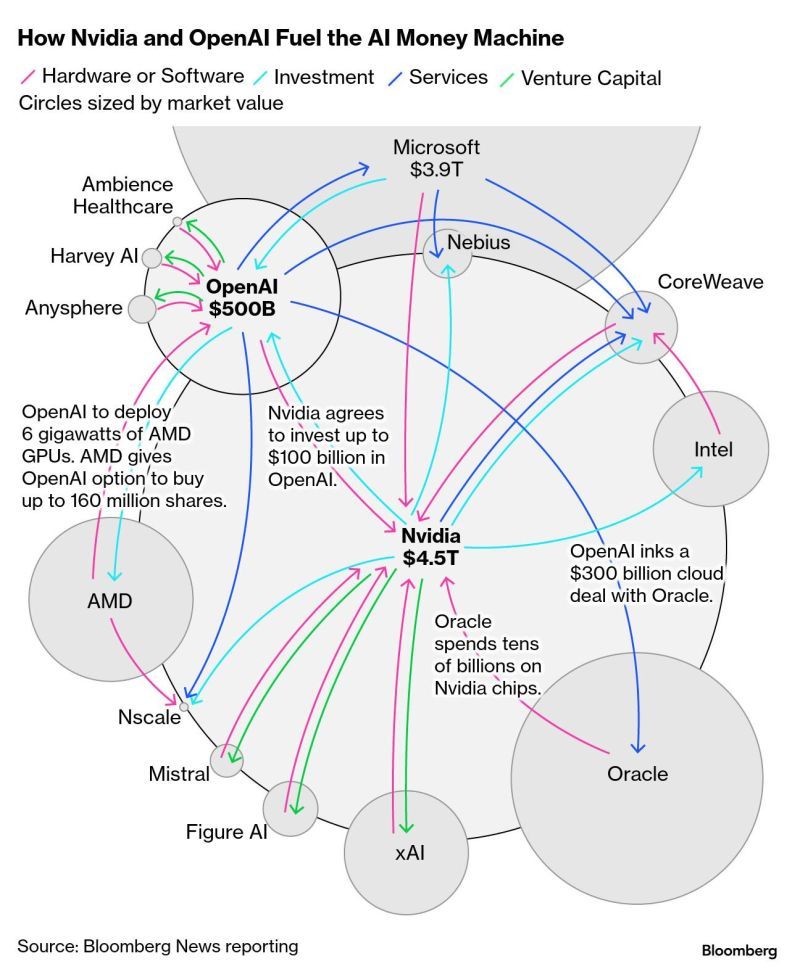
GPU infrastructure
Open World AI Models must meet the following requirements:
- Massive training
- Multimodal processing
- Advanced computing power
Companies like NVIDIA are playing a key role in this technological acceleration.
Investment opportunity: lasting trend or bubble?
In 2026, Open World AI Models could become:
- A catalyst for Web3 innovation
- A performance driver in algorithmic trading
- A lever for financial automation
But several questions remain open:
- What regulatory framework for autonomous agents?
- How much human control should be maintained?
- What are the systemic risks in DeFi?
Investors are already monitoring the AI × crypto convergence as one of the fastest-growing sectors.
Conclusion: AI is moving from a creation phase to an action phase
Open World AI Models mark a major transition:
We are moving from AI that generates… to AI that acts.
For Web3, DeFi, and crypto trading, this could mean:
- More efficient markets
- More adaptive strategies
- Advanced automation
- A new generation of intelligent financial agents
2026 could be the year that Open World AI leaves research to concretely transform the digital economy.