
The Person Who Made $69 Million with NFTs Four Years Ago Is Still Making Money





beeple, the man who sold a single NFT for a record-breaking $69 million, has always been seen as a symbol of the NFT golden age that once was.

Despite the fading glory of NFTs, beeple and his team have remained active in the NFT community. At this year's Basel Art Fair, he once again brought a "Golden Dog" — Regular Animals — to the currently lackluster NFT market.
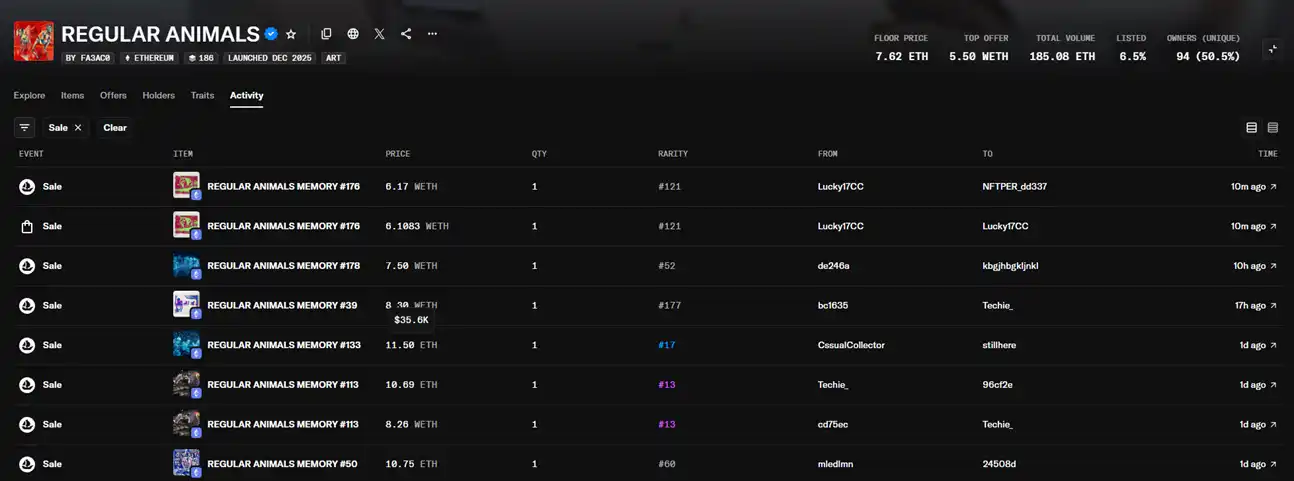
Yesterday, multiple pieces of Regular Animals were sold on OpenSea for over 10 ETH (around $35,000) each, even though this artwork was originally given out for free at the Basel Art Fair, with a total of 256 pieces distributed. By this calculation, beeple gave away NFTs worth millions of dollars at the Basel Art Fair.
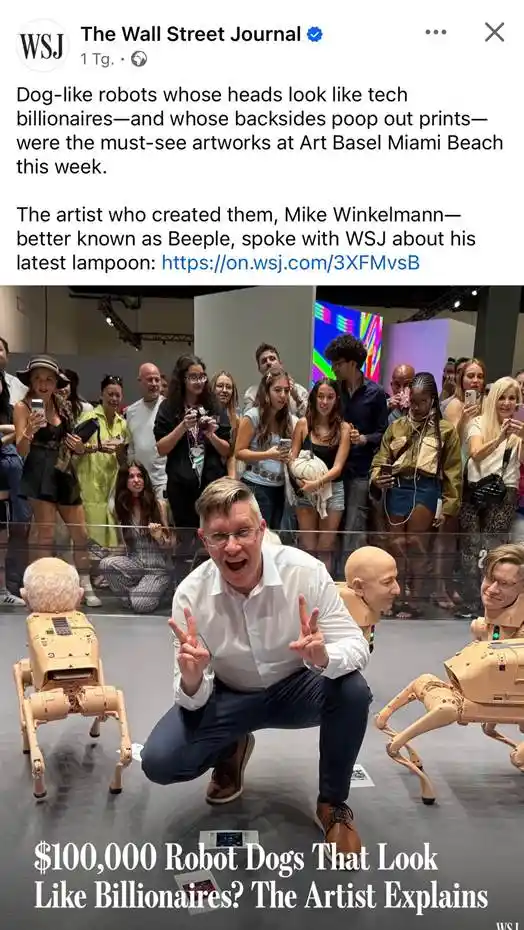
For the Basel Art Fair project, beeple and his team presented Regular Animals, a collection of "regular animals." These are a bunch of robotic dogs, as shown in the image below, with somewhat eerie human faces resembling well-known personalities such as Musk, Andy Warhol, Zuckerberg, Picasso, and even beeple himself.
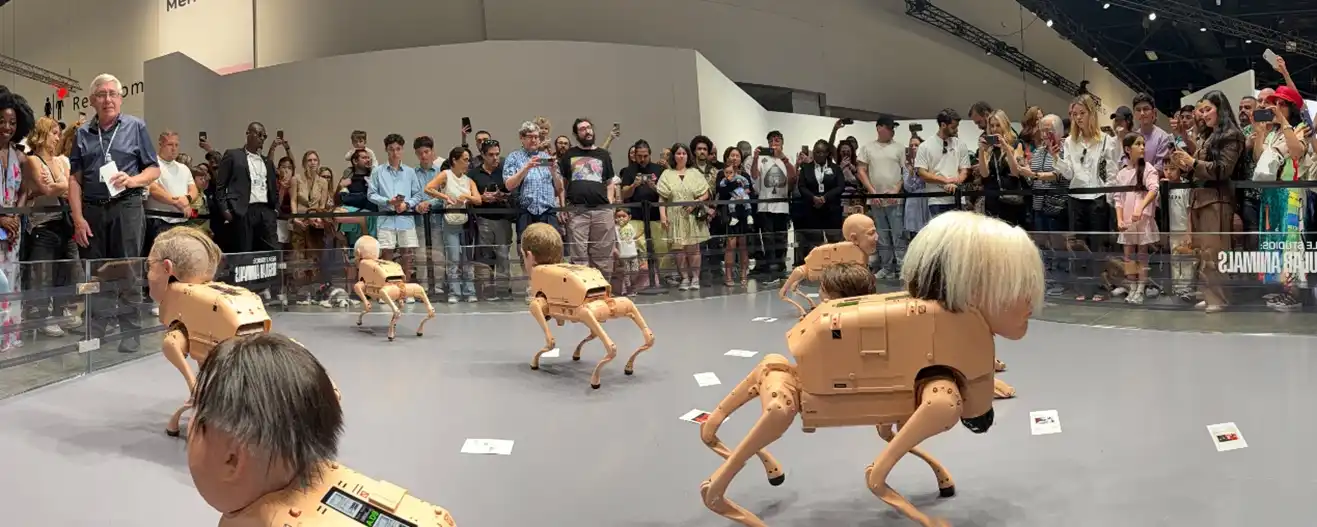
However, the visual effect of these somewhat eerie robotic dogs is not the only feature; these robotic dogs observe their surroundings through cameras in their heads and use a continuously evolving visual algorithmic logic to create art.
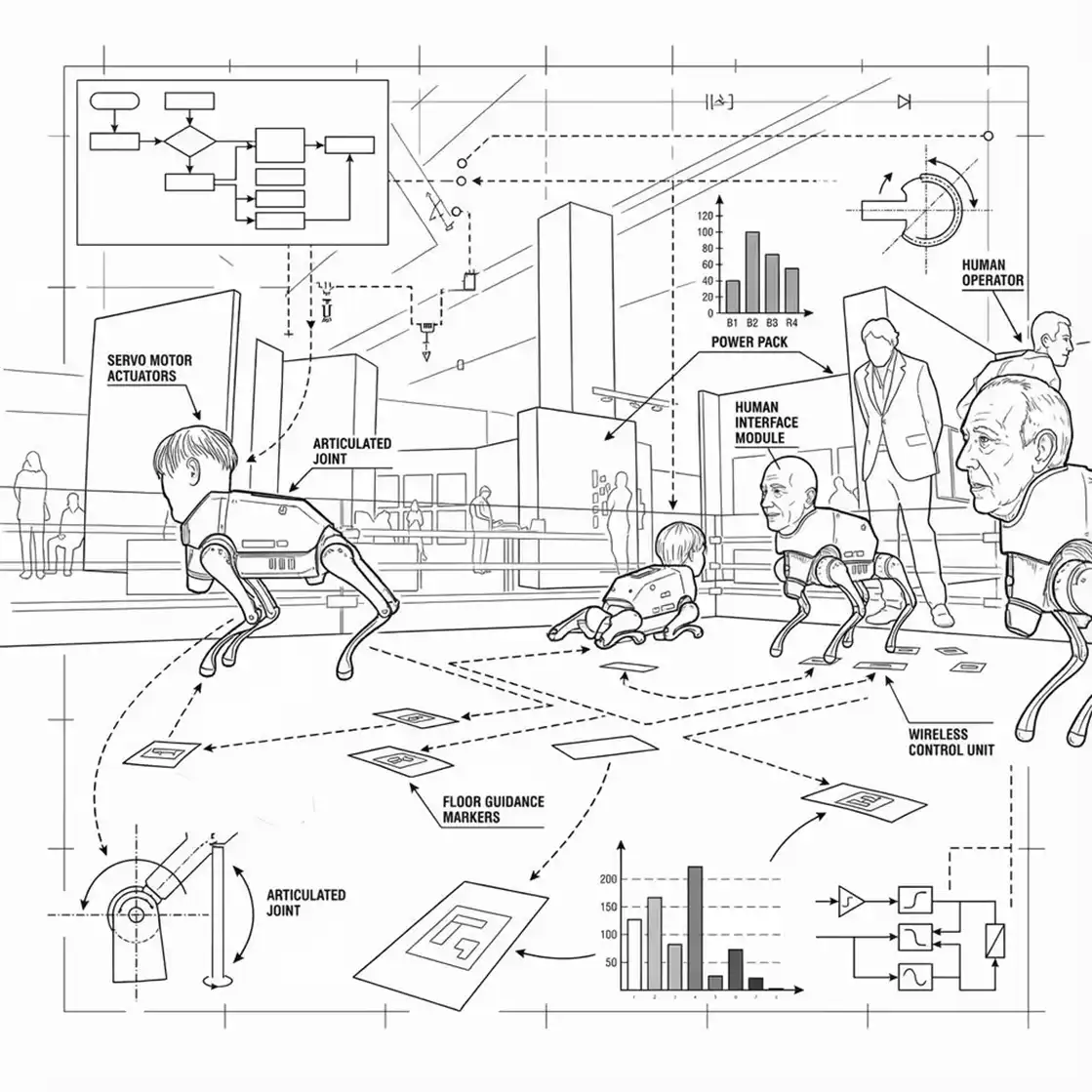
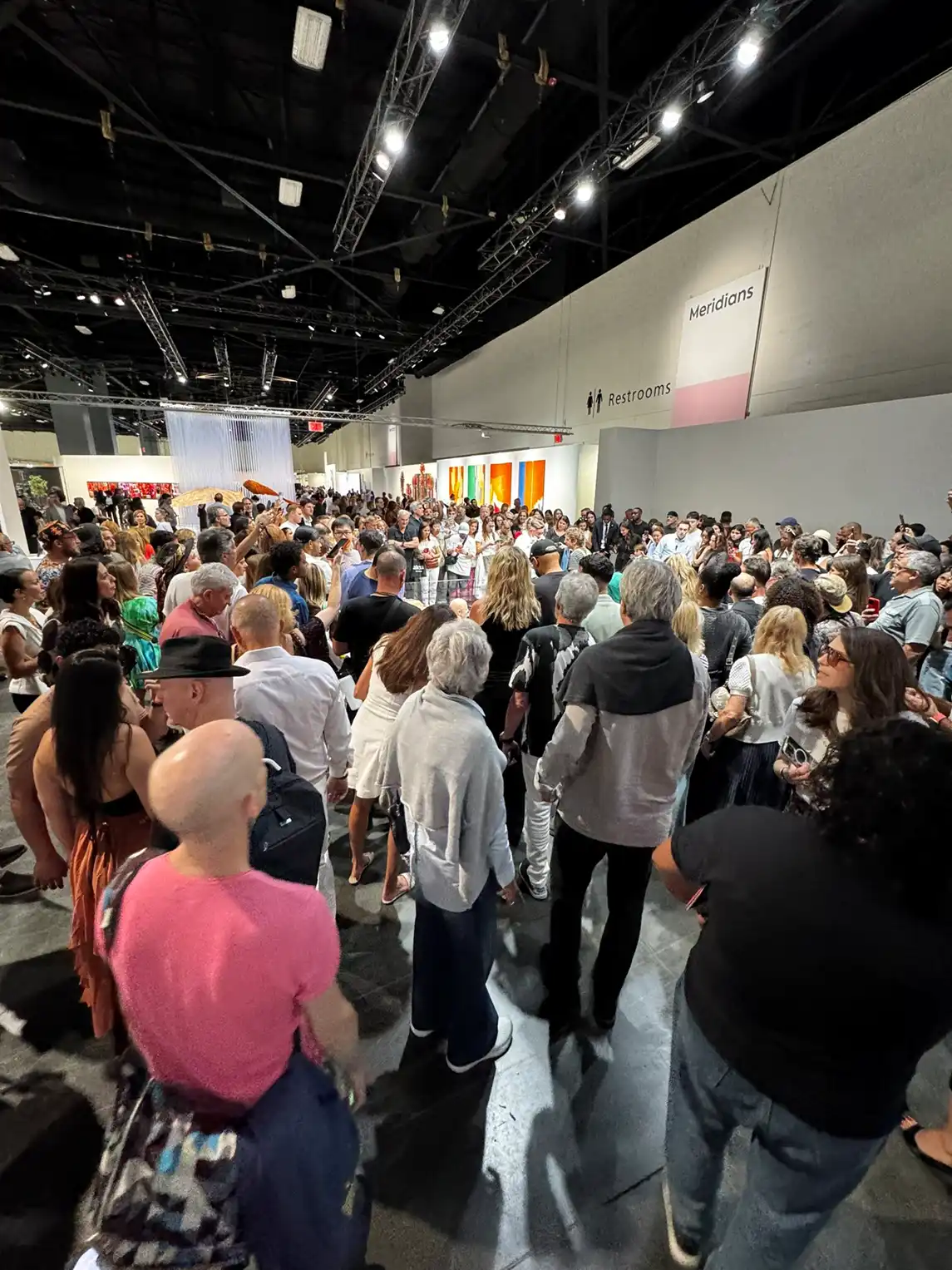
The selection of these celebrity personas embodied by the robotic dogs is not arbitrary. These personalities were chosen because they have influenced the way humans perceive the world, whether through algorithms, art, or politics. As humans, we view the world through these perspectives, and so do these robotic dogs. At the Basel Art Fair, these robotic dogs and humans observe each other, and each moment of observation becomes an artwork created by these robotic dogs, which serve as their autobiographies.
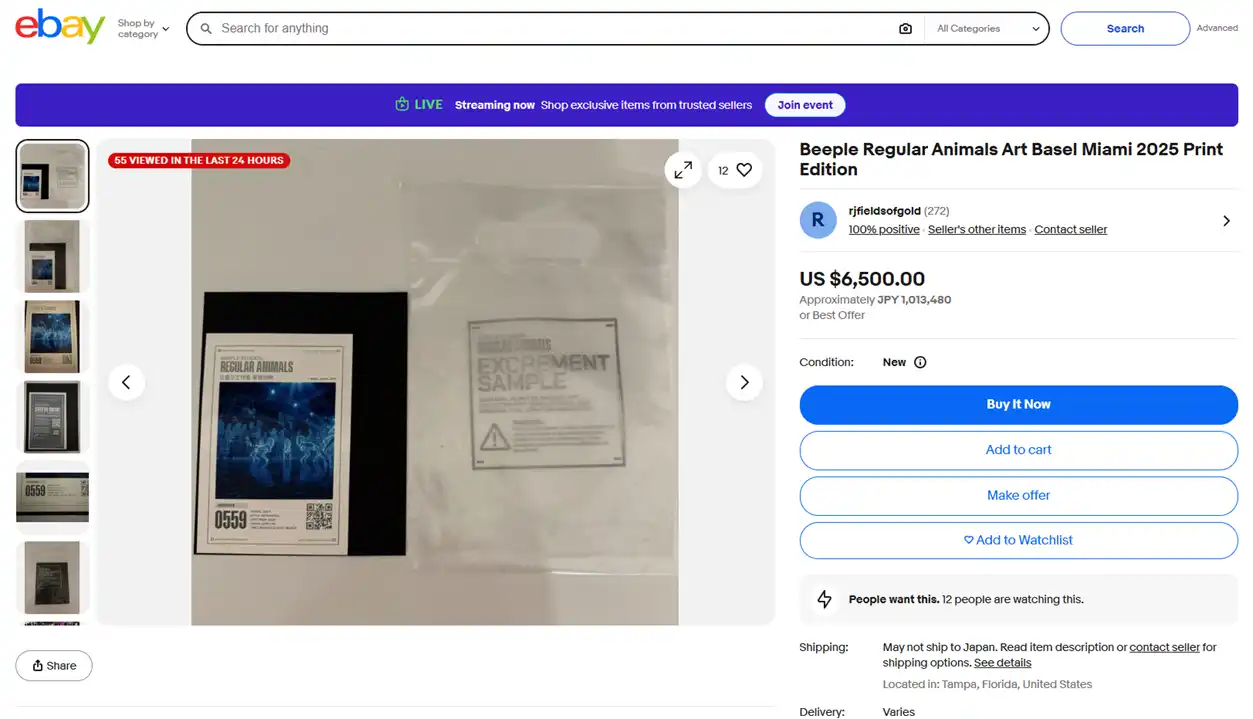
Interestingly, Regular Animas also has a physical series, totaling 1024 pieces. On eBay, someone has already listed it for a fixed price of $6500. The market pricing suggests that the NFT is far more valuable than the physical artwork, reminiscent of Damien Hirst's "The Currency" series from years ago, forcing owners to choose between physical and NFT.
Before achieving great success in the NFT space, beeple had been creating art every day since 2007, with none selling for over $100. After gaining fame and fortune, beeple did not splurge like some artists or crypto project founders. Instead, he acquired a roughly 460-square-meter studio/gallery, assembled a team of dozens of 3D artists, engineers, and researchers (including a former Boeing engineer), invited Carolyn Christov-Bakargiev, former director of the Castello di Rivoli contemporary art museum, as an advisor, continuously exhibited his work at art shows around the world, and created new art pieces.
Beeple's recent exhibition featuring robotic dogs has garnered attention not only in the crypto community due to its prices but also received coverage from traditional media outlets like the WSJ.
You may also like

From Pump.fun to Collector Crypt: Has Solana's income throne changed hands?
Looking at Stripe's ambitions and the future of stablecoins from OUSD
Do you want to buy CRCL?
Wosh: Inflation has cooled in recent weeks, AI is reshaping the economy, and forward guidance has lost its necessity
The most secretive AI winner
Former ByteDance employee's account: How I started with two Pinduoduo hard drives and made six times the profit with Seagate to achieve financial freedom?
MiCA reshuffle begins, Binance temporarily bids farewell to the EU
How does Gate redo "buying and selling stocks" from the cryptocurrency world to the stock market?
Visa and Mastercard join 140 giants to launch a new stablecoin, but the impact on the market landscape may still be limited
Circle CEO responds to OUSD's challenge: Stablecoins are a winner-takes-all business, and we will not slow down
Argentina vs Cape Verde: When a Record-Breaking Legend Meets an Unbreakable Underdog
WEEX exclusive pre-match analysis of Argentina vs Cape Verde, exploring Messi-led Argentina’s dominance and Cape Verde’s historic defensive breakout, with a breakdown of volatility, structure, and match dynamics.
WEEX Launches Depth Chart for Spot Trading
Raising interest rates to protect STRC and selling coins to maintain credit, this time the strategy has chosen the two most expensive paths
Morning Report | Samsung announces a 265.5 trillion won investment plan, focusing on semiconductor and AI computing power data centers; Vitalik publishes an article detailing the entire technology tree behind the confusion protocol (iO) mainline
In the era of AI, what is left of Bitcoin?
NeoSoul announced plans to integrate with the OKX Agentic Wallet, promoting AI agents' participation in the on-chain economy
Why Is Bitcoin Lagging Stocks in 2026? AI Stocks, ETF Outflows, and the Nasdaq Rally Explained
What you bought on CEX is really not US stocks: Analyzing the 94% liquidation monopoly and the evaporation of equity under a five-layer pipeline
From Pump.fun to Collector Crypt: Has Solana's income throne changed hands?
Looking at Stripe's ambitions and the future of stablecoins from OUSD
Do you want to buy CRCL?
Wosh: Inflation has cooled in recent weeks, AI is reshaping the economy, and forward guidance has lost its necessity
The most secretive AI winner
Former ByteDance employee's account: How I started with two Pinduoduo hard drives and made six times the profit with Seagate to achieve financial freedom?