
「Money Printer」 PUMP.FUN Establishes Investment Arm, Can $3 Million Keep a Good Project?

 Prefer us on Google


Original Article Title: "Making 9 Billion with Only 3 Million Invested, How Does Pump.fun's Math Work?"
Original Article Author: angelilu, Foresight News
On January 20, Pump.fun, the most profitable Meme coin platform in the Solana ecosystem, announced the establishment of an investment department, Pump Fund, and kicked off its first hackathon with an initial investment of $3 million to fund 12 projects. This figure, compared to its total revenue of nearly $9 billion, presents a subtle contrast: for every approximately $300 earned by the platform, only $1 is allocated to invest in the ecosystem, representing about 0.33%.
A New Attempt Under Competitive Pressure
The timing of Pump Fund's launch is intriguing. According to Solana Launchpads' transaction volume data, while Pump.fun still maintains its dominance, the recent upstart platform Bags has quickly captured over 10% market share, directly causing a decline in Pump.fun's market share.
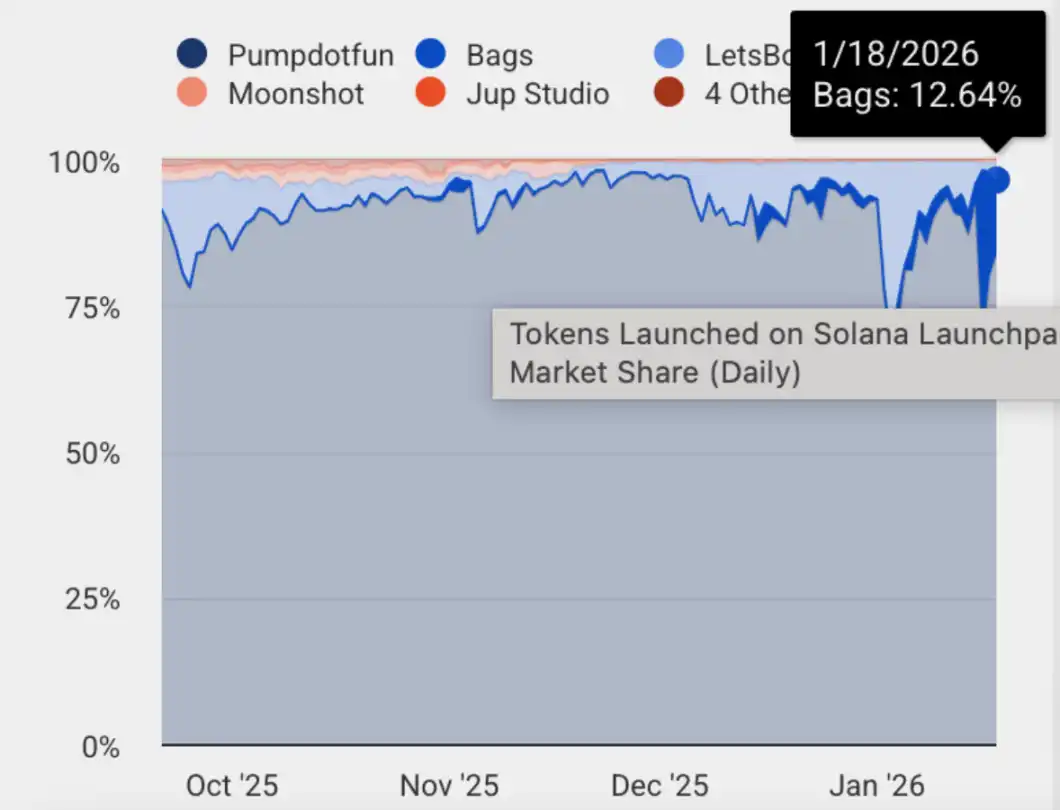
In this context, the $3 million ecosystem investment can be seen as an attempt at differentiation in competition. When the technical barrier between platforms is extremely low, and user loyalty is also extremely limited, Pump.fun chooses to establish new brand awareness through ecosystem investments—not just as a trading platform but also as a project incubator.
However, the question remains: is a 0.33% investment ratio sufficient to support this positioning? In comparison, even in relatively conservative technology companies, the investment ratio is many times higher than this number. From a business logic perspective, this is closer to an exploratory market experiment rather than a comprehensive strategic transformation.
Let the Market Be the Judge
The question that Pump Fund's experiment seeks to answer is: in the Web3 world, who should define what a "good project" is?
This global hackathon, called "Build in Public," adopts a set of rules that are completely different from traditional start-up competitions: no expert judges to score, no Demo Day pitches; instead, the market decides directly.

Specifically, participating teams must issue tokens on Pump.fun, publicly share their development progress daily, and showcase the building process through social media. The ultimate criterion is one—market response. If a project garners attention, trust, and trading volume, it proves worthy of investment; otherwise, it naturally gets eliminated. From the opening of applications on January 19 to the announcement of the first batch of winners on February 18, during these four weeks, all projects will undergo a real-time assessment in the open market. On February 18, at least one project will be selected and funded.
In the hackathon rules, the platform explicitly states that "in addition to the project's social media appeal, the long-term sustainability of the project will also be evaluated." However, it is currently unclear how to find a balance between market hype and long-term value, and what specific criteria will be used to judge.
As Pump.fun co-founder Alon puts it, "this framework creates a new path for founders who cannot access traditional capital." In a sense, this is a challenge to traditional VC investment logic—since Web3 emphasizes decentralization, why should the success of a project still be determined by a few investors.
A Deeper Business Dilemma
Aside from the mechanism design, Pump Fund also faces a more fundamental problem: even if high-quality projects are successfully incubated, will these projects stay on Pump.fun?
This is the structural dilemma of Meme coin platforms. The Nasdaq invests in tech companies going public, and companies like Microsoft and Apple continue to trade on the Nasdaq after listing, contributing long-term value to the platform. But Meme coin projects operate under different logic. If a project achieves initial success on Pump.fun, builds a user base and market recognition, what will be the next step? It is likely to migrate to a platform with greater liquidity, such as Binance or Coinbase, or even establish its own independent community.
Pump.fun is essentially a "launchpad," and projects will naturally seek a broader market as they mature. More fatally, the platform's revenue model makes it difficult to truly retain high-quality projects. Pump.fun relies on early high-frequency trading to earn fees, but as a project matures, the trading frequency tends to decrease, long-term hodlers increase, and speculative trading diminishes. From a revenue perspective, the platform always makes the most money from those "fast-moving consumer goods" that are short-term pumps, rather than the "value projects" built for the long term.
This may explain why the investment ratio is only 0.33%. In the current business model, large-scale investment ecosystems not only have uncertain returns but may even be making a wedding dress for others. This is not simply "stinginess" but a manifestation of business rationality.
Four weeks later, when the first batch of award-winning projects is announced, we may get a preliminary answer. However, the longer-term question remains: in the Meme coin field with low technical barriers and weak user loyalty, can ecosystem investment truly become a moat? As competitors like Bags continue to eat away at market share, can this $3 million experiment help Pump.fun maintain its position?
Disclaimer: This content is provided for general branding and informational purposes only and doesn't constitute financial, investment, legal, or tax advice. Any events, rewards, online events, or related information mentioned herein should not be considered a recommendation, solicitation, or invitation to purchase, sell, trade, or otherwise deal in any crypto assets or to use any services. Crypto assets are highly volatile and may result in loss. WEEX services and online events may not be available in all regions and are subject to applicable laws, regulations, and eligibility requirements. You are responsible for ensuring that your use of WEEX services complies with local laws and for carefully assessing the risks before participating in any crypto-related activities.
You may also like

Home Robot NEO Grows "Dexterous Hands": How Do Hands Become the API to the Physical World?

What is SCEX? The Cryptocurrency Exchange for Vietnam's Market by Sacombank
Major Update for ChatGPT: Cross-Platform Functionality, One-Click Website Creation, and Lower Costs

BTC Challenges 64,000 After Breaking 63,000, Market Trading 'Manageable Risks'
As the Bubble Bursts, Who Dominates Attention in the AI Era? A 2026 Guide to Influential AI KOLs in China and the UK
Old Money in Crypto Shifts: Paradigm Raises $1.2 Billion, Half Bet on AI and Robotics

Bitdeer unveils $36M Nevada factory to shake up Bitcoin mining

Perplexity Fine-Tuned a Chinese AI Model to Match Claude Opus 4.8 at One-Third the Cost

Bank of Korea defends bank-first stablecoin plan amid bill deadlock
JPMorgan says bitcoin's main risk isn't Strategy, but blockchain adoption that doesn't benefit public chains and tokens
Fear & Greed Index Today: What Extreme Fear Means for Crypto, Stocks and Gold
Labour MPs Push to Make UK Crypto Donation Ban Permanent
Supreme Court ruling expanding Trump's authority over federal agencies raises questions for SEC, CFTC as crypto rulemaking advances

'Bottom building in progress': Analysts say bitcoin holder capitulation signals late-stage bear market

A Comprehensive Analysis: Starting from 1996, Who is Laying the Foundation for the Next Generation of Capital Markets
Luke Dashjr, the Biggest Anti-Spammer of Bitcoin, Inscribed Phrases on the Network in 2011

Whales bought 270,000 BTC while ETFs bled $7 billion. One side is wrong

The crypto IPO class of 2025-26 is down as much as 89%. Autopsy of a listing boom
Robinhood Chain Mining Guide: A Comprehensive Tutorial from Cross-Chain to Memecoin
BitGo CEO says single-digit percentages of bitcoin's supply are 'probably right' for large holders amid Strategy's sale

Beyond Private Keys: How to Safeguard the Security Boundaries of Web3 from Wallets, L2 to Supply Chains?
Vanguard Enters the Market, Opening a New Crypto Gateway for 50 Million Traditional Investors

Why the OUSD Alliance of 150 Companies Still Cannot Shake USDT and USDC?
Citigroup Analysis: Is There Still 47% Upside for Nvidia? Can Rubin and CPO Deliver?
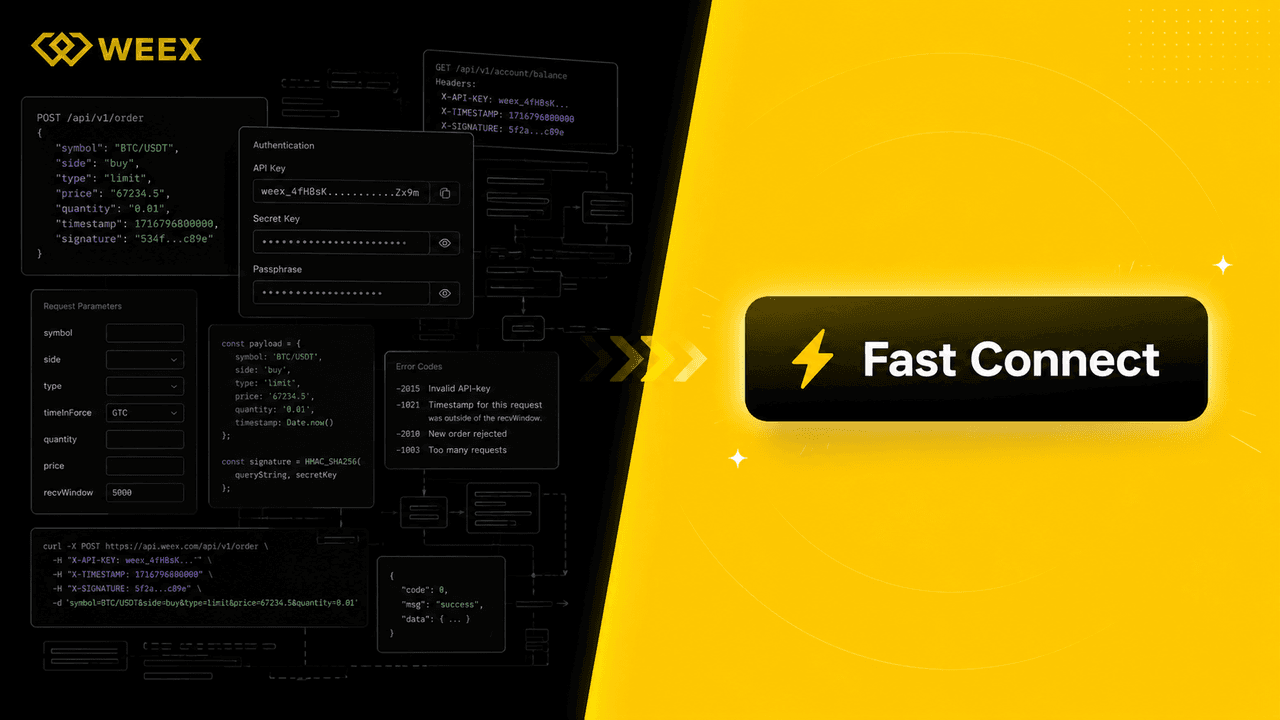
WEEX API Fast Connect: Turn Every Sign-In Into a Live Trader in Under 10 Seconds
WEEX API Fast Connect is a one-click OAuth authorization system that lets your users link their WEEX account without ever touching an API key. Frictionless onboarding, faster conversions, higher retention — built for WEEX Broker partners.
Bitcoin's dwindling exchange reserves don't pack the same bullish punch anymore

From Le Mans to the Rollercoaster: Carl Moon Takes On Portimão
Crypto world renowned KOL and racing driver Carl Moon, backed by WEEX, heads to the Ferrari Challenge Portugal round at the Algarve International Circuit, July 16–19, fresh off a podium finish at Le Mans. Here's why this race is one to watch.
Fast execution. Split-second accuracy. Security that never blinks. That's WEEX — and that's exactly how Carl races.

The Downfall of a Public Company: A $1.46 Billion Bet on WLFI, $540 Million Went to the Trump Family
Dragonfly Partner: BTC is Intergenerational Wealth, Optimistic About ETH and SOL
Goldman Sachs Calls to Go Long on Chinese AI: $4 Trillion Market Value Behind, Global Funds Only Allocated 1.2%
Home Robot NEO Grows "Dexterous Hands": How Do Hands Become the API to the Physical World?
What is SCEX? The Cryptocurrency Exchange for Vietnam's Market by Sacombank
Major Update for ChatGPT: Cross-Platform Functionality, One-Click Website Creation, and Lower Costs
BTC Challenges 64,000 After Breaking 63,000, Market Trading 'Manageable Risks'
As the Bubble Bursts, Who Dominates Attention in the AI Era? A 2026 Guide to Influential AI KOLs in China and the UK
Old Money in Crypto Shifts: Paradigm Raises $1.2 Billion, Half Bet on AI and Robotics

Contents
Latest articles





Latest coin listings on WEEX


